Reflectors are especially important in the autumn and winter season. Dusk falls earlier and earlier at this time of year, which makes pedestrians less visible on the road. For over a year now, road traffic law has required you to carry reflective elements when walking after dusk on a road outside a built-up area. Which reflectors should you choose for a child, and which for an adult? Find out in the article below!
Why do you need to wear reflectors?
After dusk, a pedestrian is very hard for a driver to see. And when it comes to road safety, time is crucial – if a driver can’t see a person on the road, there’s a risk they won’t manage to brake in time once they do spot them, and that can end in tragedy. Unfortunately, the fact that a pedestrian can see an approaching car doesn’t mean the person driving it has seen them too.
According to police experiments, a pedestrian dressed in dark clothing can be seen from a distance of around 40 metres. That’s too little for a driver to react in time and brake. When a pedestrian is wearing a reflective element, that distance increases to 150 metres, which gives the driver far more time to react appropriately.
How do reflectors and reflective elements work?
The history of reflectors began almost 100 years ago, when British businessman and inventor Percy Shaw, on the road to Halifax, noticed light reflected in the eyes of a cat sitting on a fence. Inspired by this phenomenon, he began work and research on a new invention, which was patented in 1934. It was the reflector.
Reflectors don’t emit light on their own; they reflect light from another material. More precisely, reflective elements absorb, transmit and reflect light from another object. On smooth materials the angle of reflection is equal to the angle at which the light hits them, whereas on rough surfaces the rays are scattered in different directions.
The glow of white reflective light is the result of light scattering. In practice, the driver of a car travelling after dark sees glowing elements ahead – that is, the light from their own vehicle’s headlights being reflected back by the pedestrian’s reflectors. It’s the driver in their car who illuminates the reflective elements in front of them, and these bounce the light back in the driver’s direction.
Are reflectors compulsory? What does the law say?
The obligation to wear reflectors was regulated on 31 August 2020 in Article 11(4a) and (5) of the Road Traffic Act of 20 June 1997 – anyone walking along a road outside a built-up area after dusk is required to use reflective elements. Failing to do so can result in a fine of PLN 100.
People walking on a pavement or in a residential zone after dusk are exempt from the requirement. The regulations don’t specify what reflective elements should look like, and there’s a really wide choice on the market – everyone will find something to suit them.
What to look for when choosing reflectors?
On the market you’ll find reflective vests for adults and children, bands and gadgets made from micro-bead or micro-prismatic material. Any item that can be attached to clothing can serve as a reflective element. What matters is that you can place them somewhere visible – at knee height, on the hands, in the middle of the chest or back, or even on the wrist.
By wearing a vest or other reflective gadgets in the right places, you’ll ensure you’re properly visible on the road – and therefore safe.
Which reflectors to choose for a child?
Younger children don’t fully understand the dangers on the road. Older ones, meanwhile, think they can protect themselves. It’s very important to make your child aware, whatever their age, that not every situation on the road is within their control, and that’s why they need to protect themselves.
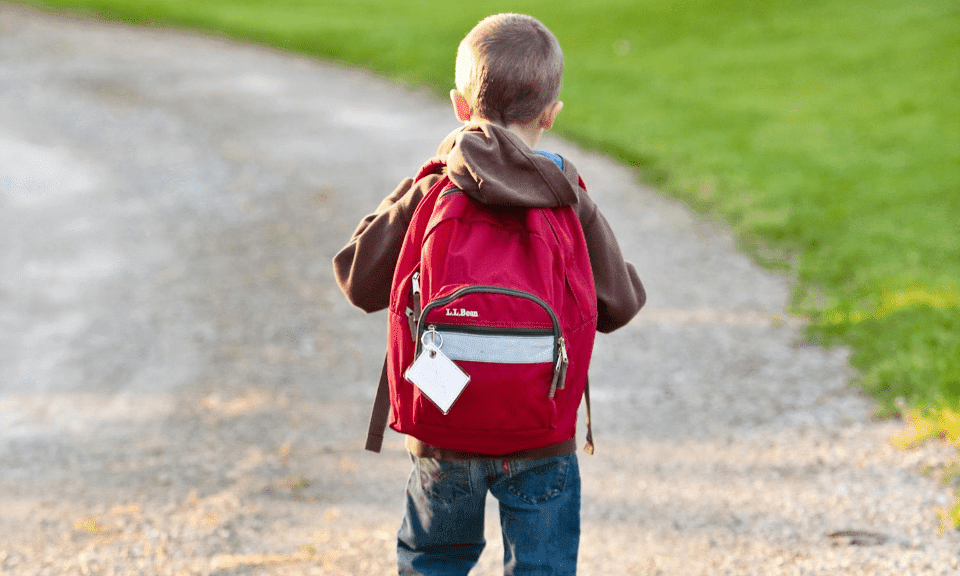
Offer your child reflectors they can choose for themselves. All kinds of stickers and key rings that can be attached to a backpack or jacket work brilliantly – there’s no need to remember them, as they’re permanently attached to clothing or other items, and there’s a wide range of designs and shapes on the market that your child is sure to like.
A reflective band is the most popular choice among adults, but also among teenagers. Its simple shape means it doesn’t stand out in everyday life, yet it does its job once dusk falls. A self-wrapping (snap) band can be worn not only on the wrist, but also attached to a backpack, a bag strap or a jacket cuff.
How to persuade a child to wear reflectors?
The best approach is to take your child for an evening car ride and point out how poorly visible pedestrians without reflective elements are. You can also outline different scenarios of what could happen if a pedestrian stepped onto the road. It’s also a good idea to show your child how reflectors work. You can demonstrate it in a darkened room at home. Once your child understands why they need reflective elements, go shopping together and find a reflector they like and will be happy to wear.
Remember to always set an example for your child and wear reflective elements after dark – after all, you’re their role model!
Reflectors on a bike
When riding a bike, you’re also obliged to make sure drivers can see you properly. After dark, you should have reflectors too. You need to place them somewhere visible on the bike – on the spokes, or at the front and rear. You can choose clip-on reflectors or special stickers – what matters is that they do their job.
As a cyclist, you can also add reflective elements to your clothing. There are various accessories, capes and even reflective sportswear available on the market. You can choose from reflective jackets, hats, vests, harnesses and even helmets. Importantly, reflective clothing will also help you be more visible on sunny days. Don’t forget proper bike lighting either – it makes cycling on the road safer.
How to keep your child safe – and not only after dark?
In the autumn and winter season, dusk not only falls earlier but also lasts longer. Children walking to school in the morning are often still moving about in the dark, so reflective elements are essential to keep them visible on the road.
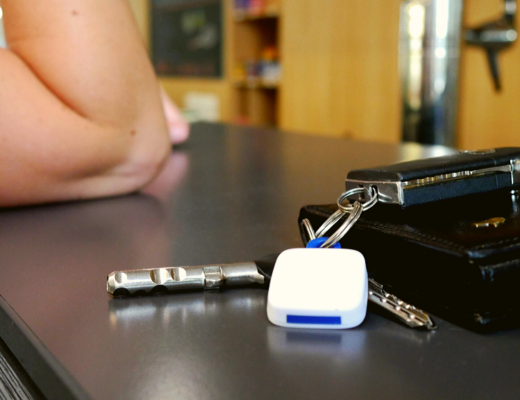
But that isn’t the only safety concern worrying parents of children who walk to school on their own. If you want to look after your children even more closely, you can invest in a GPS tracker, which lets you check on the map in the app where your child was last located. The notiOne range includes notiOne go! PLUS wristbands and small notiOne GPS trackers. Such a device can be attached inside a backpack or tucked away inside it. That way, a parent will always know where their child is and can keep them safe.