Article summary:
The SIM card in a GPS tracker is responsible for sending the position to the app. The GPS module itself determines the location, but without data transmission you won’t be able to see it remotely on your phone. For the tracker to work, it needs a SIM card with active mobile data, correct APN settings, good coverage and a technology supported by the device, e.g. 4G, LTE-M or NB-IoT.
The most convenient solution is a tracker with a built-in SIM card or a telemetry SIM card designed for IoT devices. A regular SIM card can also work, but it usually requires more attention: signing a contract, activation, a data package, disabling the PIN and keeping an eye on the account’s validity. If you forget to disable the PIN, the card simply won’t work properly.
Table of contents
- What is a SIM card for a GPS tracker?
- Telemetry SIM card vs a regular SIM card
- Coverage, APN and data transmission: what affects how GPS works?
- How much data does a GPS tracker use?
- Does a SIM card for GPS require registration or a subscription?
- The most common SIM card problems in a tracker
- SIM card for GPS: key takeaways
- FAQ

What is a SIM card for a GPS tracker?
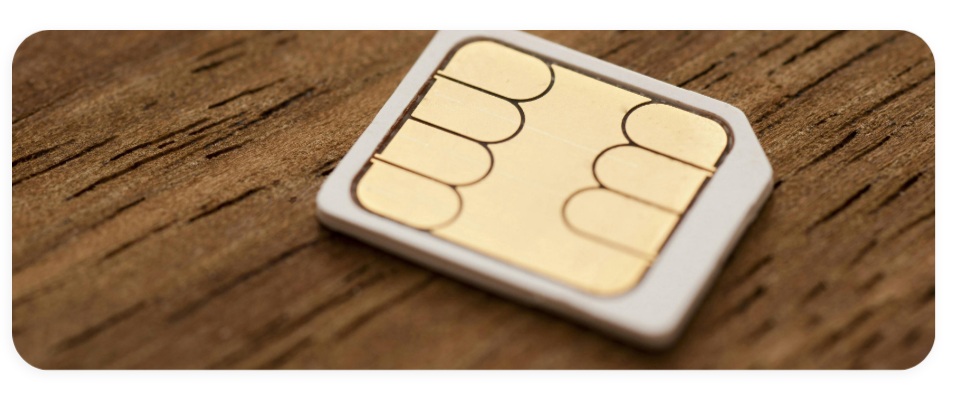
A SIM card for a GPS tracker makes it possible to send data from the device to an app or a location platform. It’s a key part of the device, because it’s what allows the tracker to send information about its current position, route history, alerts, safety zones and device status.
In fact, practically every GPS tracker needs a SIM card if it is to transmit its location. The GPS module itself determines the position, but the card is responsible for sending that position on to the user. The exception to this rule is trackers that work using Bluetooth technology. Such devices work within a radius of 90 metres and, within that range, connect to your phone and pass on information about their position. That’s why this kind of solution doesn’t require data transmission over the mobile network.
Telemetry SIM card vs a regular SIM card
A telemetry SIM card is designed for devices that automatically send small packets of data. It is used in GPS trackers, alarms, meters, sensors, vehicles and IoT devices.
A regular SIM card is designed mainly for a phone: calls, text messages and heavy internet use. A telemetry SIM card is better suited to continuous operation, low data usage and machine-to-machine communication.
That’s why, in GPS trackers, a telemetry SIM card usually performs better than a classic prepaid card. It doesn’t need to be checked as often, it’s better adapted to devices working in the background and it can provide more stable data transmission.

What affects the correct operation of a GPS tracker?
Two things above all affect how a GPS tracker works: the GPS signal and mobile network coverage. GPS determines the position, and the SIM card sends the data to the app. If the device has no access to the mobile network, the location may appear with a delay or may not update straight away.
APN settings also matter. APN is the configuration that allows the SIM card to connect to mobile internet. If the APN is wrong, the tracker may see the SIM card and have coverage, but it still won’t send its location to the app.
GPS trackers can use various data transmission technologies, including 2G, 3G, 4G, LTE-M and NB-IoT. The most important thing is that the SIM card and the device support the same technology. Older trackers often worked on 2G or 3G, while newer ones increasingly use 4G, LTE-M or NB-IoT.
It’s worth remembering that the 3G signal is being gradually switched off. The plan is for the 3G signal to be completely switched off in Poland by 2030. This is important information, because you need to take it into account when deciding to buy a device, i.e. check which frequency the device works on. The good news is that all notiOne devices already work on the 4G/LTE frequency
How much data does a GPS tracker use?
A GPS tracker usually uses a small amount of data, because it sends small packets containing messages for the user. Typically this is the position, time, battery status or alarms. Data usage also depends largely on how often your tracker’s position is refreshed. Put simply, this is how often the app refreshes the place where your tracker currently is. The more often it shows you the current position, the more data it will use.
And precisely because it’s hard to determine data usage exactly, it’s worth looking for subscription-free solutions and offers, i.e. devices that come with a factory-fitted SIM card.
Does a SIM card for GPS require registration or a subscription?
In Poland, a standard SIM card requires registration. This also applies to cards used in GPS trackers if they are bought as regular prepaid cards.
It’s different for trackers with a built-in SIM card or a card supplied by the device manufacturer. In this model, the user often doesn’t have to register the card themselves, because handling data transmission is part of how the device or service works.
A GPS tracker can also work without a classic subscription. No subscription doesn’t mean no SIM card, however. It only means that the user doesn’t have to sign a separate contract with an operator, top up the card or settle the data transmission themselves.

The most common SIM card problems in a GPS tracker
The most common SIM card problems in a GPS tracker stem from a lack of active mobile data, a wrong APN, an unsupported network technology, poor coverage, an active PIN code or no credit on the account.
If your GPS tracker isn’t working properly, check:
- whether the SIM card is active,
- whether it has a data package,
- whether it works in a phone,
- whether the SIM card PIN is disabled,
- whether the APN is correct,
- whether the tracker supports the given network technology,
- whether the device has mobile coverage,
- whether the tracker has been tested outdoors.
In many cases the problem isn’t with the GPS itself but with data transmission. The device may know its position but be unable to send it to the app.
SIM card for GPS: key takeaways
A SIM card for GPS is responsible for sending the location from the device to the app. GPS itself determines the position, but the SIM card makes it possible to read it remotely.
The safest choice is a GPS tracker with a SIM card matched by the manufacturer, or a telemetry SIM card designed for IoT devices. A regular SIM card can work, but it requires more attention: registration, activation, a data package, APN settings, disabling the PIN and compatibility with the device’s technology.
Frequently asked questions:
A GPS tracker can determine its position without a SIM card, but it won’t send it remotely to the app. A SIM card is needed to transmit data over the mobile network.
Not every SIM card works in a GPS tracker. The card must have active data transmission, the PIN disabled, the correct APN, and it must support a technology compatible with the device.
A GPS tracker usually uses little data, because it sends short messages with its position and device status. Usage increases with frequent location refreshes and when working in LIVE mode.
A telemetry SIM card is a card designed for devices that transmit data automatically. It is used in GPS trackers, alarms, meters, sensors and IoT devices.
Not always. A GPS tracker can work without a separate subscription if the manufacturer provides data transmission in the price of the device or as part of its own system.
A regular SIM card can work in a GPS tracker, but it isn’t always the most convenient option. You have to keep track of registration, the data package, account validity, APN settings and compatibility with the device yourself.
Check whether the SIM card is active, whether it has a data package, whether the PIN is disabled, whether the APN is correct and whether the device supports the technology of that card.