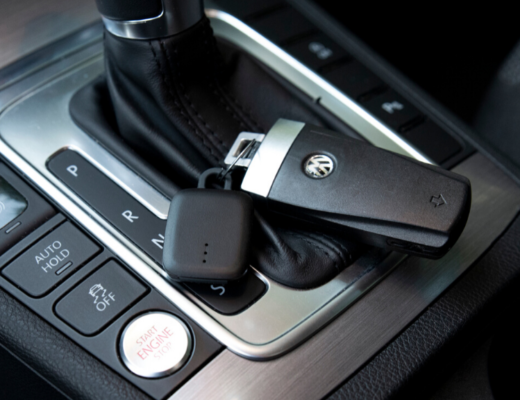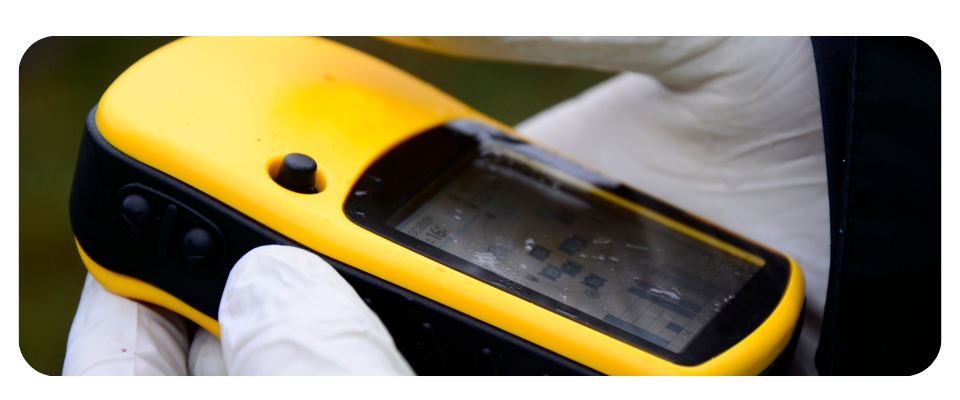
A GPS detector helps you check whether a hidden tracker, listening device or camera has been planted in your car, garage or flat. It comes in handy whenever you want to reduce the risk of being tracked, recorded or listened to without your consent. The term “detector” actually covers a range of different devices: GPS tracker detectors, GPS detectors, bug detectors and GPS camera detectors.
There are plenty of such solutions on the market today, and an effective detector alone can help you find a suspicious device. Bear in mind, however, that no device gives you a 100% guarantee. A lot depends on what you’re looking for, where the equipment has been hidden and, most importantly, whether it’s transmitting a signal at that particular moment.
How do GPS detectors work?
GPS detectors work by picking up the signals or characteristic features of hidden devices. They can react to GSM transmissions, radio waves, WiFi, Bluetooth, camera lenses or a magnetic field.
If a GPS tracker sends its data over the mobile network, a GPS/GSM tracker detector can pick up the GSM signal. If a hidden camera works over WiFi, a detector can indicate an active transmission. If a tracker has been attached under a car with a magnet, a magnetic field detector may be the most helpful tool.
Not every tracker transmits all the time. Some devices only send a signal every few minutes, after detecting movement or at specific moments. That’s why a quick scan of a car or a room isn’t always enough.

What types of GPS and bug detectors are there?
The market offers various types of GPS, bug and camera detectors. They differ in whether they are designed to find trackers, detect radio signals, spot hidden cameras, check for GSM bugs, locate transmitters or inspect for spy devices in general.
- GPS/GSM tracker detectors help you find devices that determine their position and send it over the mobile network. They are most often used to check cars, motorcycles, company vehicles, leased cars and garages.
- Radio signal detectors and RF scanners pick up active transmitters. They can help you search for bugs, wireless cameras, trackers and other devices that send data. Remember, though, that a phone, router, laptop, smartwatch or Bluetooth headphones can emit a signal too.
- Camera detectors and lens detectors help you find hidden cameras, even when the camera isn’t transmitting a signal. A lens detector works by reflecting light off the camera lens. This matters, because some cameras record footage to a memory card and don’t send data in real time.
- Magnetic field detectors help you find trackers that are attached with a magnet. This type of detector is useful for inspecting a car, because a magnetic tracker can be hidden under the vehicle and doesn’t have to transmit a signal all the time.
- Multifunctional models combine several detection methods in a single device. They can react to radio signals, GSM, WiFi, hidden cameras and bugs, and sometimes also to a magnetic field.
Where are GPS detectors used?
GPS detectors are used wherever there is a risk of being tracked, listened to or recorded without consent. They are most often used to check cars, garages, offices, consulting rooms, hotels, rental flats and other places where you want to keep your privacy.
| Place | What to check | Which type of detector can help |
|---|---|---|
| Car | underbody, wheel arches, bumpers, boot, glove box and storage compartments, around the OBD port | GPS/GSM tracker detector, magnetic field detector |
| Garage | parking spot, metal elements, objects close to the car | signal detector, tracker detector |
| Hotel or flat | smoke detectors, lamps, clocks, routers, chargers, mirrors, ventilation grilles | camera detector, lens detector, RF scanner |
| Child’s room | electronic toys, chargers, lamps, shelves, small devices pointed at the bed or desk | camera detector, radio signal detector |
| Office and consulting room | power strips, electronic equipment, decorations, meeting room | bug detector, RF scanner, multifunctional model |
In a car, the main goal is to detect hidden GPS trackers. In a hotel or flat, it’s more often about hidden cameras and bugs. In an office, the priority is protecting conversations, customer data, contracts, pricing and strategic information.

How to check whether there is a GPS tracker in your car
A GPS tracker in a car can be hidden under the vehicle, in a wheel arch, behind a bumper, in the boot, under a seat or near the OBD port. That’s why simply looking in the glove box usually isn’t enough.
The simplest sequence of steps:
- Inspect the car from the outside – especially the underbody, wheel arches, bumpers and the area around the wheels.
- Check the interior – the boot, storage compartments, the space under the seats and the area around the OBD port.
- Use a GPS/GSM tracker detector – move it slowly over the suspicious spots.
- Pay attention to metal elements – a magnetic tracker may be attached under the car.
- Repeat the check after starting the car – some trackers only transmit once they detect movement.
If the detector shows a stronger signal in one spot, don’t assume the worst straight away. First check whether there’s a phone, router, Bluetooth module, alarm or another legitimate source of signal nearby.
Which GPS detector should you choose?
A GPS detector has to be matched to what you want to check. One device will work well for a car, another for a hotel, and yet another for an office.
| Need | Better choice |
|---|---|
| Checking a car | GPS/GSM tracker detector + magnetic field detector |
| Checking a hotel or flat | camera detector + lens detector |
| Suspected bug | radio signal detector or RF scanner |
| Inspecting an office or consulting room | multifunctional model |
| Regular work for security staff or private investigators | professional bug and tracker detector |
For a first-time user, ease of use matters most. A good detector should give a clear signal, come with clear instructions and cover a detection range that matches the problem. Labels such as “the best detector”, “professional bug detector” or “effective bug detector” alone aren’t enough. Before buying, check whether the device detects GSM, WiFi, radio waves, cameras, magnetic fields, or several of these at once.
Is a professional bug detector worth it?
A professional bug detector makes sense when checks need to be carried out regularly, or when they concern important conversations, company data, a company car or a consulting room. Such devices usually have a wider detection range than simple detectors aimed at private users.
More expensive equipment isn’t always the better choice, though. For a one-off check of a car or hotel room, ease of use is often more important than advanced functions the user doesn’t know how to make proper use of.
Where there are serious suspicions, a camera and bug detector alone may not be enough. In that case, it’s worth considering a professional sweep of the vehicle or room by someone who knows where transmitters, cameras and trackers are most often hidden.

Will a GPS detector find every tracker?
A GPS detector won’t find every tracker in every situation. What matters most is whether the device is currently transmitting a signal, where it has been hidden and what technology it uses.
The hardest trackers to detect are those that are:
- in sleep mode,
- switched off,
- working intermittently,
- logging data without transmitting it in real time,
- very well hidden physically.
That’s why, if you have a genuine suspicion, it’s worth combining several methods: check for a signal, inspect the typical mounting spots, look for magnetic elements and repeat the check after starting the car or moving it somewhere else.
FAQ – frequently asked questions about GPS detectors
A GPS detector can help you find a tracker in a car if the device is transmitting a signal or has a magnetic element that can be detected. It’s best to check the car slowly, paying attention to the underbody, wheel arches, boot, storage compartments and the area around the OBD port.
Not every GPS detector detects listening devices. Bugs are mainly detected with radio signal detectors, RF scanners and multifunctional models.
A camera detector doesn’t guarantee that every hidden camera will be found. A camera may not transmit a signal and may store footage locally instead. In that case, a lens detector and a thorough visual inspection come in useful.
A phone is no substitute for a professional GPS detector. Phone apps have limited capabilities and don’t detect many types of trackers, bugs or hidden cameras.
A GPS tracker in a car can be hidden under the vehicle, in a wheel arch, bumper, boot or glove box, under a seat or near the OBD port. Devices with a magnet are often attached to metal parts underneath the car.