Interest in e-bikes keeps growing year on year. Even without a government subsidy scheme, the industry hasn’t slowed down and continues to develop. As a result, there’s a growing need for knowledge about choosing the right e-bike or motor. In this article we’ll focus on the electric motor itself. We’ll go through e-bike motors (mid-drive and hub), the differences between geared and gearless designs, the key parameters (e.g. maximum torque, e-bike motor power, maximum assistance) and how to match a motor to each category: city, trekking, electric mountain bike, cargo and “light e-bike”.
We know that if you’re looking for information about an electric motor for a bike, you usually aren’t after theory. You want to choose a motor that genuinely suits your route, the weight of your bike and your riding style. The problem is that high power on paper doesn’t guarantee an effective electric motor in practice. In e-bikes, other things matter too: torque, the way assistance is delivered, voltage (36V/48V), servicing and whether the drive system is even legal.
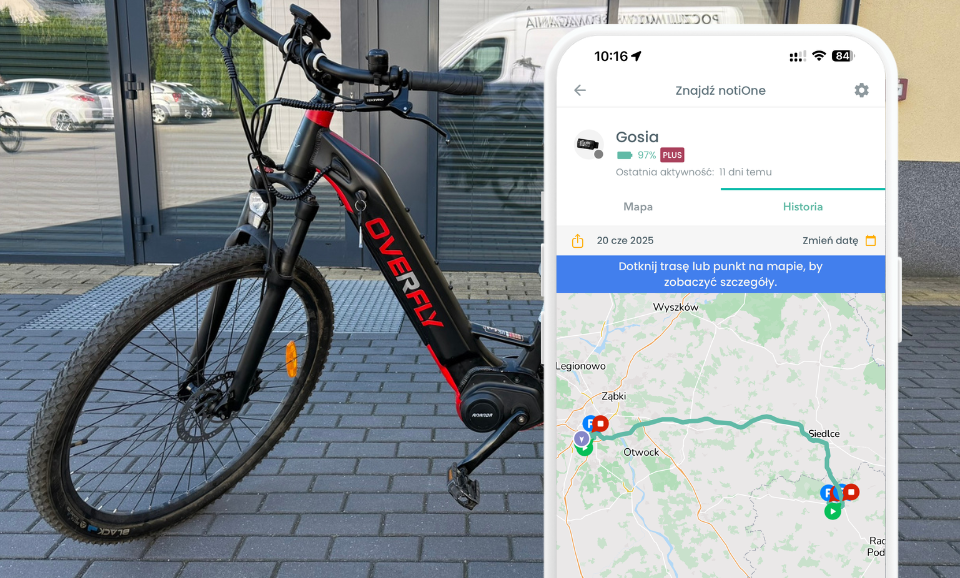
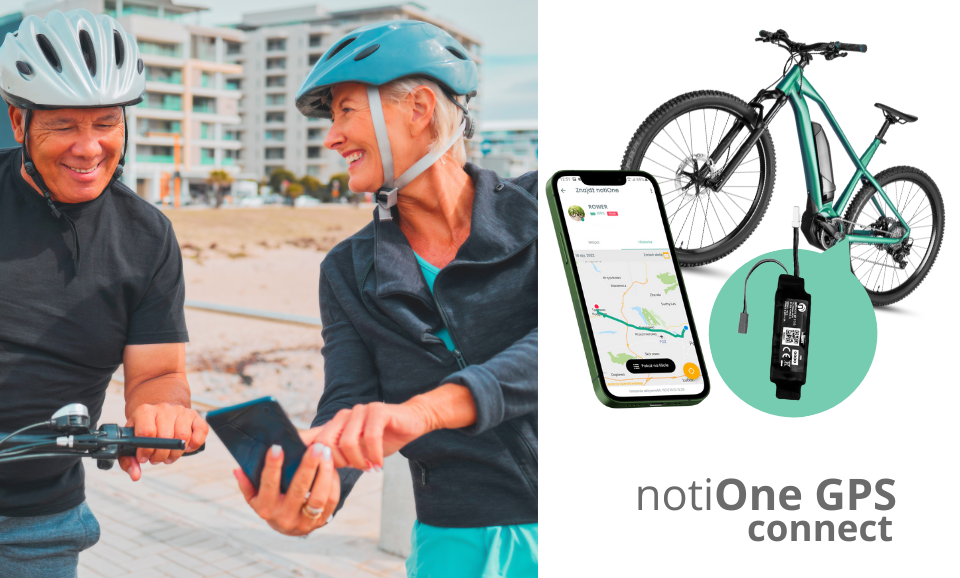
And since owning an e-bike is often an investment of several thousand, I’ve also slipped in a sensible note about security: notiOne GPS Connect. A GPS tracker designed for hidden installation in an e-bike’s motor housing.

The basic types of e-bike electric motors
To get the basics straight, you first need to know the most popular types of e-bike motors. They break down as follows:
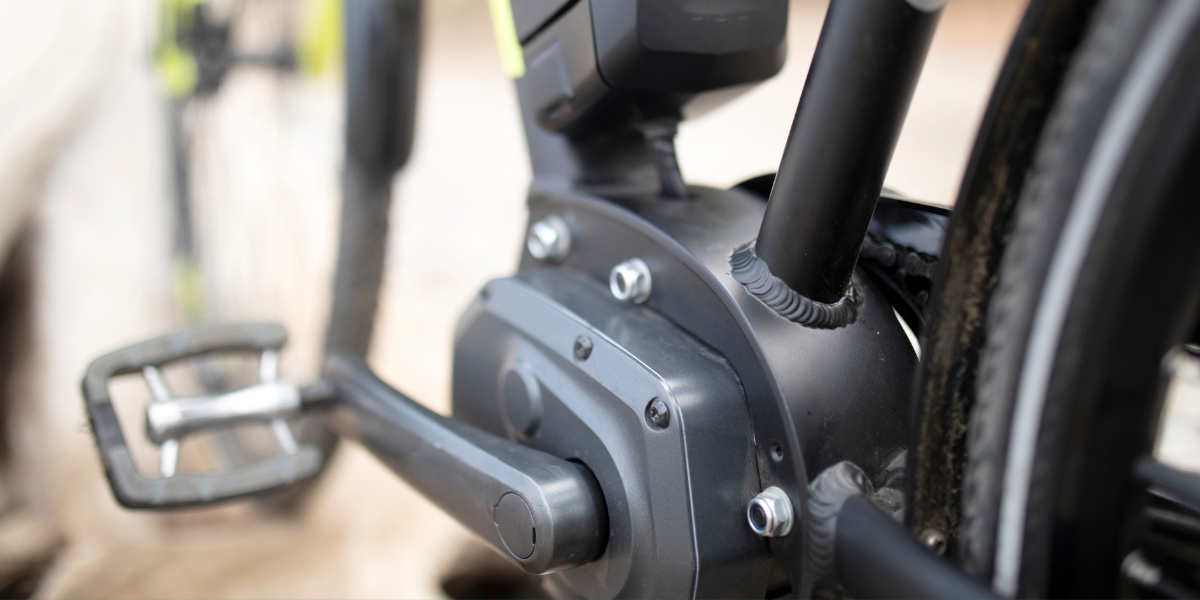
- Mid-drive motor (central electric motor) – mounted around the crank.
- Hub motor – in the front or rear wheel, often chosen as an “add-on electric motor” for conversions.
- Hub design: geared motors and gearless motors (direct drive).
What you choose affects the ride feel, servicing, chain/cassette wear and behaviour on climbs. If you still don’t know which electric motor to pick, we explain everything below.
Mid-drive motors: balance and high torque
A mid-drive motor has one big advantage: it makes use of the bike’s gears. In practice, it’s easier to keep your cadence and efficiency on steep climbs, and the bike handles more naturally (the weight sits low and in the centre).
As for the numbers, top e-MTB drive systems often hover around 85 Nm. For example, Bosch Performance Line CX quotes 85 Nm and high levels of assistance. Shimano EP801 also lists 85 Nm (and 36 V as the rated voltage in its specification). Yamaha PW-X3 likewise: 85 Nm, 36 V, 250 W rated.
Now for the critical part: “high torque” is great, but only when you have traction (tyre, terrain, technique) and a sensible choice of gearing. Otherwise you’ll just spin the wheel or wear out the drivetrain faster.
Hub motors: easy installation and popular for conversions
A hub motor wins on simplicity. If you’re doing a conversion, it usually looks like a “complete electric drive kit”: a wheel with a motor + controller + battery + sensor. Installing an electric motor like this is usually easier than fiddling with the bottom bracket and crank.
The downsides are predictable: weight in the wheel hurts agility, and under load on steep climbs a hub motor can be less efficient than a mid-drive (especially at low speed). That doesn’t make it “bad” – it’s simply often great for the city, but not always for hard MTB riding.
Geared and gearless motors: design differences and applications
Which brings us neatly to the hub itself. To be honest, you’ll come across two approaches in hub motors:
- Geared motors – are lighter and often have less drag when riding without assistance. A very sensible direction for the city and light routes.
- Gearless (direct drive) – are simple and very durable. However, they tend to be heavier and sometimes offer regenerative braking – but again, bear in mind that on a bike the real energy gain usually doesn’t work miracles.
And please remember: if you want to compare e-bike motor models, don’t start with watts. In the real world, three things matter: torque, the assistance characteristics and the system’s limits (controller/battery).
When does torque matter?
Torque (Nm) tells you how hard the motor “pulls” when setting off, uphill and under load. It’s the parameter you most often feel immediately – more so than “power”.
In e-MTB, the market standard is around 85 Nm in top-end mid-drive motors (Bosch/Shimano/Yamaha).
If you see figures like 160 Nm in conversion kits, we’re usually talking about powerful conversion drives and equipment “outside the classic EU pedelec”. For example, the Bafang BBSHD is often described as ~160 Nm.
And here’s an important note: the “maximum torque” figure alone doesn’t settle the matter. Two drive systems with the same Nm can ride completely differently if they map assistance differently (torque sensor vs cadence sensor, lag, aggressiveness).

Does motor power affect performance and assisted speed?
In the EU, the key figure is rated continuous power. For a bike to be treated as a classic EPAC/pedelec, the drive system must have a maximum of 250 W continuous power, and assistance must cut out at 25 km/h (and only work while you’re pedalling).
That’s why claims like “36v/48v 1500 watt electric motor” need to be read carefully: in many configurations that’s no longer an “ordinary e-bike” in the legal sense, and the consequences can be real (vehicle classification, requirements). It’s not worth ignoring, because “faster on paper” often ends in problems rather than convenience.

Motor voltage: 36V, 48V and their effect on efficiency
You’ll most often find 36V in OEM systems (e.g. Shimano EP801 is rated at 36 V; so is Yamaha PW-X3).
48V appears more often in more powerful conversion kits or in cargo/US-class solutions.
Critically: voltage on its own doesn’t raise the legal “maximum assisted speed of a bike” in the EU, because the 25 km/h limit comes from regulations, not from volts.
In practice, higher voltage can deliver more stable power under load (depending on the controller and battery), but it’s no magic shortcut to a “faster pedelec”.
Which motors suit which types of bike
Choosing a drive system is simple if you answer honestly: where do I ride, how often, with what load, and do I care about “power” or about refinement? It’s like matching shoes to a particular type of activity.
Motors for MTBs: high power and durability off-road
For an electric mountain bike, a mid-drive is most often the “right electric motor”, because it manages traction and gearing better. In this class, 85 Nm is now the standard (Bosch CX, Shimano EP801, Yamaha PW-X3).
If you want to “push hard”, look not only at Nm but also at how refined the motor is at high cadence and at the service support available in Poland. That counts for more than marketing “maximum assistance” – slogans like that are, and always will be, just slogans designed to get you to spend money.
Motors for city bikes: comfort and economical riding
In the city, simplicity and predictability win. A hub motor (often geared) is a sensible option for commuting and a relaxed pace – less fuss with the drive system, and the ride still feels “light”.
If you care about a natural feel, go for systems with a torque sensor (regardless of where the motor sits). It makes a real difference to how the bike feels.
Motors for trekking and gravel bikes: long-distance versatility
Here a “lightweight electric motor” often wins, along with a sensible compromise between assistance and weight. For example, Mahle positions its systems as lightweight solutions for sports/trekking bikes (depending on the specific system and configuration).
In trekking, it’s also important that the drive system isn’t “overdone”: long routes favour predictability and efficiency, not aggressive mapping.
Motors for cargo and road bikes: strength or lightness depending on your needs
In cargo bikes, what counts is torque when setting off and stable assistance under load. A mid-drive makes sense here because it works through the gears.
In “light” road/gravel bikes the priorities are different: it’s often about subtle assistance and a natural ride, not the “pull” of an e-MTB.
Who makes e-bike electric motors?
In practice, the electric motor manufacturer matters mainly because of: servicing, parts availability, updates and integration with the battery/app.
Bosch, Shimano and Yamaha motors: quality and integration
These are the most common choice in higher-end bikes, because you get a well-refined ecosystem.
- Bosch Performance Line CX quotes 85 Nm and high assistance.
- Shimano EP801 lists 85 Nm and 36 V.
- Yamaha PW-X3: 85 Nm, 36 V, 250 W rated.
If you’re buying a complete bike, this is usually the “safest” long-term decision.
Bafang and Brose motors: popularity and power
Bafang motors are very popular in conversions and in projects where the numbers are meant to impress. For example, the Bafang BBSHD electric motor is often described as a powerful mid-drive kit with around 160 Nm of torque, which sounds great but tends to fall outside the classic definition of an EU pedelec.
In this world you’ll also come across terms like Bafang mid-drive motor (mid-motor), e.g. in Bafang’s M-series family.
Brose, in turn, is a well-known player in mid-drive systems, often associated with smooth operation and “natural” assistance delivery (although in the end it’s the integration in a specific bike that counts).
Other manufacturers: Panasonic, Mahle, Ananda, DJI Avinox
Panasonic and Mahle are firmly established in the OEM market (across segments: from more powerful MTB systems to lightweight designs). DJI Avinox is a hot topic in e-MTB, because the market is moving ever more strongly towards “performance” – but that’s all the more reason to stick to the facts and to what’s legal in your country/vehicle class.
Frequently asked questions and practical tips
If you’re thinking about a conversion, a “motor on its own” rarely makes sense. It usually ends with you needing a controller, battery, sensors and accessories anyway, so it’s better to look at a complete electric drive kit. A factory-built bike has a different advantage: integration and servicing. In the long run, it’s often the less stressful decision.
The biggest advantage is simple: fewer barriers, more riding. Climbs and headwinds stop “killing” your motivation, and commuting to work becomes something you do consistently.
And now a practical extra: since an e-bike motor and battery push up the value of your bike, it’s worth securing it sensibly. notiOne GPS Connect is installed discreetly in the e-bike’s motor housing and lets you check the bike’s position in the app (it’s a solution designed for hidden installation in e-bikes).
It doesn’t replace a U-lock, but it’s a sensible second layer when the bike has real value.
In 2026, common sense still beats marketing:
First, legality: for an EPAC/pedelec, the rules are 250 W continuous power and assistance cutting out at 25 km/h (plus assistance only while pedalling).
Second, servicing: even the “most popular type of motor” can be a problem if there’s no diagnostic support or parts in your area. Third, matching the motor to your route: if you ride on the flat and in the city, chasing “maximum torque” is often a waste of budget. If you ride in the mountains or on a cargo bike, then Nm and refinement make a difference.