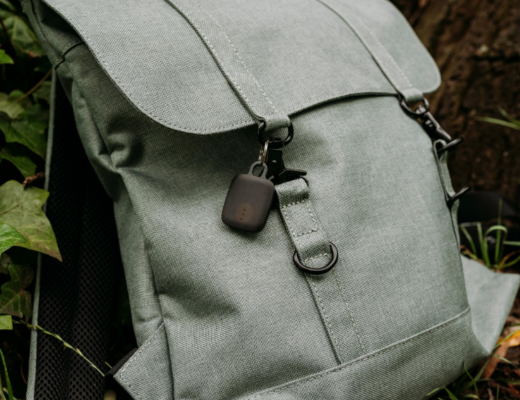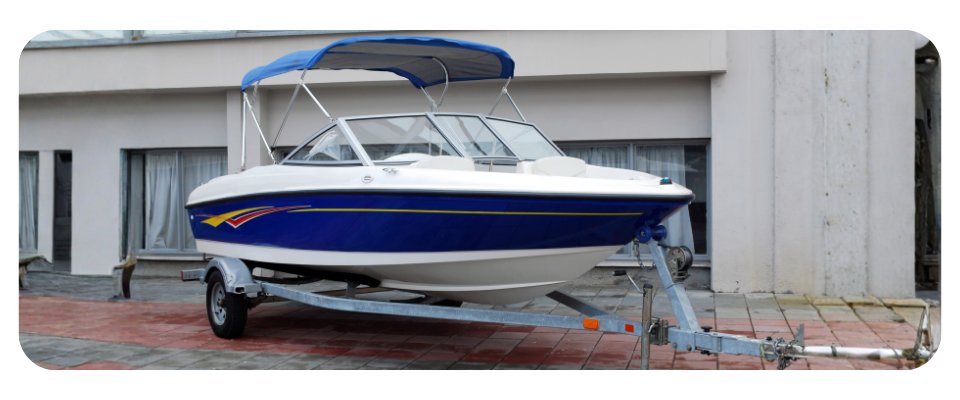
A GPS tracker for a boat lets you check where your boat, jet ski, motorised inflatable dinghy or boat trailer is when it’s out of your sight. Not every boat owner thinks about a tracker straight away. Servicing, transport, mooring, the engine, insurance and getting the equipment ready for the season usually come first. Locating a boat only becomes important once the equipment is left somewhere for a longer period: at the marina, by the holiday cottage, on an allotment, at a service centre, in storage or in a car park.
In these situations, a GPS tracker for your boat gives you a simple advantage: you can check where your equipment is in the app, without making phone calls, guessing or driving over just to make sure everything is still there.

Is a GPS tracker for a boat only for expensive yachts?
No. That’s a myth. GPS monitoring of a boat makes sense not only for expensive yachts, because watercraft equipment rarely means just a single vessel sitting in a harbour. In reality, the whole set has considerable value: the boat, the outboard motor, the inflatable dinghy, the jet ski, the trailer, the rigging and the equipment. The outboard motor alone for a smaller vessel can cost well over PLN 10,000. For example, a Yamaha F9.9 outboard motor costs around PLN 12,500 – and that’s still the segment of small vessels, dinghies and fishing boats.
This matters, because with watercraft equipment the target doesn’t have to be a luxury yacht. The target can be the motor itself, the jet ski, the dinghy, the trailer or the complete set ready for transport. The police have reported the theft of a jet ski worth PLN 35,000 and the theft of a trailer with a jet ski worth PLN 60,000. An even more striking example concerns motors alone. In one case, the police recovered more than 40 stolen outboard motors for motorboats, worth no less than PLN 200,000. This clearly shows that an outboard motor isn’t just an accessory to a boat. For a thief, it can be a target in its own right.
A boat GPS tracker and equipment theft
A GPS tracker doesn’t prevent theft on its own. It’s no substitute for a lock, insurance, a good place to leave your boat or plain common sense. Its role is different: it gives you information at the moment when information matters most.
If the equipment disappears, the owner doesn’t have to start from scratch. They can check where the tracker last reported its position, whether the boat has been moved and in which direction it travelled. The location data can be passed on to the relevant services, which makes it easier to establish where the equipment was last seen or where it was taken.
This is especially important with watercraft equipment, which is easy to move. A jet ski is often already sitting on a trailer. An outboard motor can be unbolted. A dinghy can be packed up and driven away. A boat trailer is sometimes left separately from the boat. In these cases, reaction time matters a great deal.
Without a tracker, the first step is usually phone calls, driving to the site and guesswork. With a tracker, the first step is checking the location in the app.

Do you need to be an expert on GPS trackers?
No. A GPS tracker for a boat should be simple to use: you open the app and check where your equipment is.
A good GPS monitoring system shows more than just the boat’s current location. Depending on the model, it may offer route history, LIVE mode, safety zones, a motion alert and a notification when a set speed is exceeded. With watercraft equipment, this has very practical uses. You can check whether the boat has left its mooring, whether the dinghy has been driven away, whether the jet ski and trailer have started moving, or which way the equipment travelled.
Tracking a boat doesn’t mean staring at a map all the time. It’s about a quick check whenever the equipment is out of your reach: in transport, at a service centre, at a rental company, at the marina or in storage.
When choosing a tracker, it’s worth checking the battery life, the mounting method, the app, location history, notifications and resistance to moisture. With watercraft equipment, waterproofing or installation in a sheltered spot is particularly important.
Boat GPS monitoring and GPS tracking systems
There are various GPS tracking systems on the market, from simple trackers for private users to elaborate fleet solutions. For a private boat, dinghy, jet ski or trailer, the most advanced system isn’t always what matters most. More important are a convenient app, stable location tracking, location history and quick access to information when the equipment changes location.
GPS monitoring of a boat is meant to be practical. An owner doesn’t need a complicated technical dashboard if they simply want to check where their boat, dinghy, jet ski or trailer is. That’s why, when choosing the best GPS for watercraft equipment, it’s worth looking at real-world use rather than just a table of specifications.
It’s also worth paying attention to naming. A GPS tracker isn’t always a GPS speedometer for a boat. It may display speed or send a notification when a set speed is exceeded, but its main role is GPS location of the boat, location history and support in keeping an eye on your equipment.
Is it worth thinking about GPS before the season?
Yes. The best time to think about a GPS tracker for your boat is before the season, before the equipment goes on the water, to the marina, to the allotment or out on the road. Before the season, owners check the engine, the battery, the trailer, the paperwork, the insurance, the life jackets and the equipment. A GPS tracker deserves the same treatment: as part of preparing your equipment for safer use.
This matters, because the theft or loss of equipment in the middle of the season isn’t just a cost. It also means cancelled trips, paperwork, stress and, often, lost weeks on the water. GPS doesn’t guarantee that nothing will happen. What it does give you is the ability to react faster. If your boat, dinghy, jet ski or trailer disappears, is moved or is towed away, a tracker shortens the most important stage of the response: working out where to start looking.