Every year, many dog owners wonder how to prepare their dog for New Year’s Eve and whether there’s any way to make that night at least a little calmer. For us it’s fireworks, champagne and a night of fun, but on New Year’s Eve a dog sees and hears far more: bangs, flashes, the smell of smoke. No wonder dogs are scared of fireworks and try to run away. They often become defensive, because it’s a completely new situation for them, or one that’s utterly different from normal dog life.
A typical fireworks display can reach as much as 150–170 dB – roughly as loud as an aircraft taking off, and well above the level considered safe for human hearing. Impressive, isn’t it? For a dog, which hears more and more sharply than a human, it’s a genuine “sound assault”. So it’s hardly surprising that studies show as many as 70–80% of dogs display signs of stress or anxiety related to fireworks.
If you’re looking for advice right now and typing “how to help a dog on New Year’s Eve”, “what to do with a dog on New Year’s Eve” or “how to calm a dog on New Year’s night” into a search engine, this guide is for you.

A dog on New Year’s Eve – what is your pet really going through?
From a dog’s point of view, there’s no such thing as “pretty fireworks”. There’s only the bang, the flash and the smell of smoke.
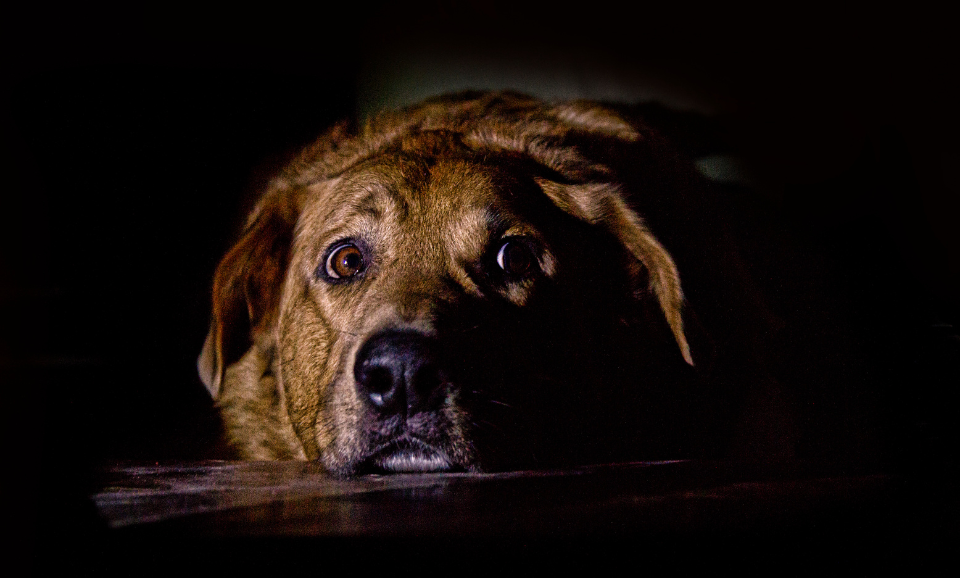
Behavioural research confirms that fear of loud noises (including fireworks) is one of the most common problems in dogs. Your dog really may not cope with the noise on New Year’s Eve. The first signs to watch out for are trembling, heavy panting, hiding in corners and looking for somewhere to take cover.
In practice, a dog that’s scared of fireworks tries to find any safe place it can, or to get as far away from the source of the noise as possible. And that’s where the key question comes in: how do you calm a dog on New Year’s night, and how do you calm a dog when there are explosions going off all around? The good news is that while we can’t switch off the bangs, we can help a dog feel safer on New Year’s Eve and significantly reduce the risk of it running away.
How to prepare your dog for New Year’s Eve – the week before
It’s best to start early, not on the afternoon of 31 December.
- Book a consultation with a vet if your dog is scared of bangs even during thunderstorms or when a single firecracker goes off. A good specialist will advise what’s best for your dog: pheromones, supplements and sometimes medication.
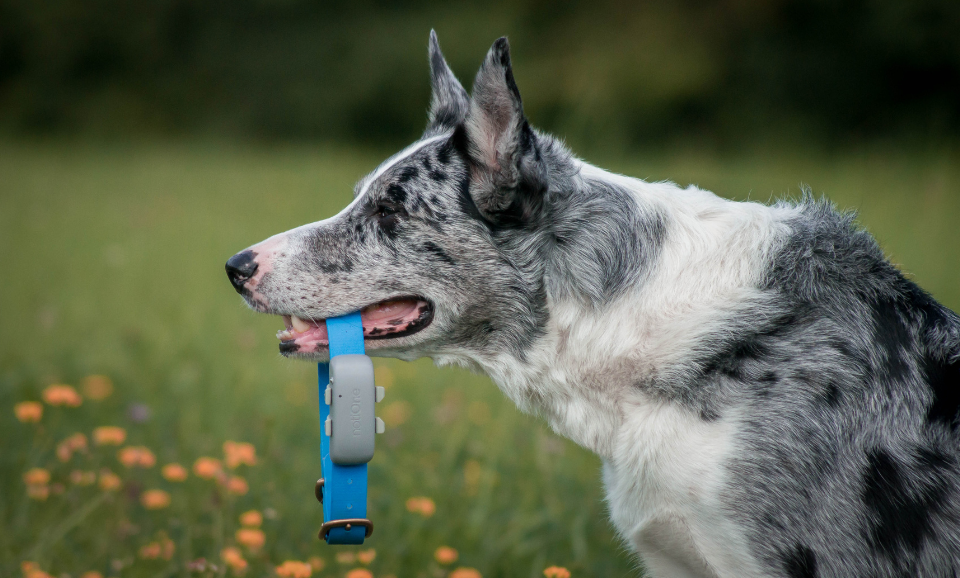
- Check that your dog’s microchip details are up to date, that you have a GPS tracker (believe us, it can save the day) and that your dog is wearing an ID tag with your phone number.
- Set up a “safe base”: choose a quiet room for New Year’s Eve and put your dog’s bed, a blanket and favourite toys there. It’s worth doing this a week ahead so the dog gets used to the new spot.
Preparations like these mean that New Year’s Eve for your dog won’t come as a surprise, but will be a situation you have a plan for. It’s also the first important step when you’re wondering how to help your dog on New Year’s Eve and how to calm your dog without any last-minute panic.

What to do with your dog on New Year’s Eve – a plan for the day (checklist)
Here’s the answer to the practical question of what to do with your dog on New Year’s Eve so that it’s safer for the dog and calmer for you.
- A long walk during the day – tire your dog out early, before the frequent explosions start.
- Only short trips outside in the evening – on a leash and in a well-fitted harness; no running off-lead on New Year’s Eve, unless you have a GPS tracker.
- Draw the curtains and turn on some music or the TV – a bit of background sound helps when your dog can hear the bangs outside.
- Provide a hiding place – let your dog hide under the table, in a crate or in its own corner if that’s where it feels safe.
- Consider dog ear defenders – special noise-cancelling ear muffs for animals can dampen some of the noise; for some dogs, these “dog headphones” are a genuinely big relief.
This simple plan for the day answers the basic question of how to help your dog on New Year’s Eve and reduces the risk that a frightened dog scared of fireworks will bolt.
How to calm your dog on New Year’s night – and what to avoid
The key question for many owners is how to calm a dog on New Year’s night and how to calm a dog once the bangs have already started.
On New Year’s night itself, what helps is:
- the calm presence of the owner – your tone of voice and behaviour are like a barometer for your dog,
- sniffing games, chewing a chew toy or licking a lick mat – these naturally calm a dog on New Year’s Eve,
- properly fitted ear muffs or dog ear defenders, if your dog accepts them,
- sticking to the daily routine: dinner, a short walk on New Year’s Eve, sleep. So that your dog feels the world hasn’t been turned upside down.
What to avoid on New Year’s Eve – a list of “forbidden” behaviour towards your dog
It’s good to know what to do, but it’s just as important to know what not to do when a dog is scared of explosions. Several popular “tricks” for calming a dog on New Year’s Eve actually only ramp up its fear.
- Human “calming” medication – Don’t give your dog human medicines (such as Relanium, hydroxyzine or sleeping pills). They often just immobilise the dog while the fear remains. Any medication is a decision for the vet alone.
- Forcing the dog to watch the fireworks – Taking it out onto the balcony or up to the window with lines like “come on, look, it’s nothing”. That’s not desensitising – it’s piling on more trauma.
- Shouting and punishment – Comments like “stop being hysterical” or “calm down” and raising your voice only confirm to the dog that something bad is happening. It doesn’t understand the words, only the tone and the tension.
- Leaving an anxious dog alone – Going out to a party when you know your dog is terrified of bangs is asking for disaster: self-harm, escape attempts, wrecking the flat in a panic.

Safety outdoors – a GPS tracker, and not just for New Year’s Eve
Even the best plan isn’t always enough. A stairwell door left ajar at the wrong moment, a firecracker under the balcony, a moment’s inattention – and your dog may simply run off on New Year’s Eve. Then the key question is no longer just how to calm your dog, but how to find it quickly. The data points to a 30–60% rise in the number of lost pets during fireworks periods. This is where a GPS tracker for dogs such as the notiOne GPS PET PLUS or notiOne GPS PET BASIC clipped to the collar is a huge help. With it:
- you can see in the app where your dog is if it breaks free and runs off on New Year’s Eve,
- you can set up a virtual safety zone for your dog around your home; if it leaves the zone, you get a notification,
- you’re not searching for your dog “blind” on New Year’s Eve – you head to a specific location.
A tracker like this comes in handy not just on New Year’s Eve, but also on holiday, in the forest or in a new city. It’s an extra layer of safety when your dog is scared of fireworks or gets lost in unfamiliar surroundings.
Summary – how to help your dog on New Year’s Eve in a few sentences
Take your pet’s fear seriously. New Year’s Eve for a dog is a genuinely hard night, not a “whim”. Start your preparations early – you can use our checklist or your own tried-and-tested methods. Plan the day itself: a longer walk in daylight and a quiet evening with no spontaneous outings, with a clear plan for what to do with your dog on New Year’s Eve.
On the night of the fireworks, rely on routine, simple calming games and, if your pet accepts them, gentle dog ear defenders. Add a layer of safety in the form of a GPS tracker so that, if your dog does run away on New Year’s Eve, you can find it quickly rather than searching “blind”. That way you’ll not only know how to prepare your dog for New Year’s Eve, but also how to calm your dog on New Year’s night. Most importantly, you’ll genuinely increase the chances that on 1 January your dog will simply be asleep next to you, rather than appearing in a “missing” notice.