Updated 2025
In Poland there is no single regulation that explicitly states at what age a child may be left home alone. The law does, however, state that a child under the age of 7 should not use a road on their own without the supervision of a person who is at least 10 years old. In practice, the decision about whether a child can walk home from school alone or stay home alone depends not only on age, but also on their maturity, the situation and the real level of safety.
It is not just a matter of regulations, but also of a responsible judgement about whether the child can cope in a specific situation. What counts here is not only talking things through and teaching the rules, but also proper preparation. A child tracker can help a parent check whether the child has arrived at school, come back home and is where they are supposed to be.

From what age can a child walk the streets alone?
In Poland there are no clear-cut legal provisions specifying the age from which a child may go out into town on their own, but there are rules that govern whether minors are allowed to use the road and that oblige legal guardians to ensure their safety:
The Road Traffic Act of 20 June 1997, Article 43(1), states:
“a child up to the age of 7 may use the road only under the supervision of a person who is at least 10 years old.”
This rule does not apply in residential zones or on roads intended exclusively for pedestrians.
The Code of Petty Offences, Article 106 of the Act of 20 May 1971, contains the following provision:
“whoever, being obliged to care for or supervise a minor under the age of 7 or another person incapable of recognising or defending themselves against danger, allows that person to remain in circumstances dangerous to human health, is liable to a fine or a reprimand.”
The situation is complicated, however, by a provision of administrative law and the Act of 25 June 1999 on cash benefits from social insurance in the event of sickness and maternity:
“A care allowance is due to an insured person released from work due to the need to personally care for a child up to the age of 8 in the event of the unforeseen closure of the nursery, children’s club, kindergarten or school the child attends.”
And a provision of Article 12 of the Civil Code of 23 April 1964 (Article 426):
“Persons who have not reached the age of thirteen, as well as persons who are fully legally incapacitated, do not have legal capacity.”
Based on the regulations above, it can therefore be concluded that a child under the age of 7 cannot be left at home unsupervised. Children under 7 may use the road, but only under the supervision of a person who is at least 10 years old. In practice this means that, when answering the question “from what age can a child stay home alone”, experts usually point to the threshold of 7 years – and even beyond that, what matters most is the child’s maturity, not their age on paper.

Can 12-year-olds go out alone?
Yes, children who have turned 12 can leave the house on their own, but they do not have legal capacity.
Can children under 13 go out alone?
Children under the age of 13 may leave the house on their own, but they do not have legal capacity. That only changes once they turn thirteen.
Can a 5-year-old stay home alone?
A child of this age cannot be left home alone, as the regulations make clear. Even if a 5-year-old is left in the flat unintentionally, the parent or legal guardian may face a fine, a reprimand, or a custodial sentence or restriction of liberty.
From what age can a child walk to school alone?
A child who is going to walk to school on their own must be at least 7 years old in order to be legally allowed to use the road unaccompanied. Otherwise it counts as leaving the child without supervision.
Your child walking home from school – what you need to remember
First and foremost, you need to keep your child’s safety in mind. Not every child who has turned 7 is capable of making the journey to school and back on their own, so they need to be properly prepared for it:
- the child should know the basic safety rules and the rules of the road,
- they should know the route to school and from school back home,
- they should look after their personal belongings: house keys, phone, documents, etc.
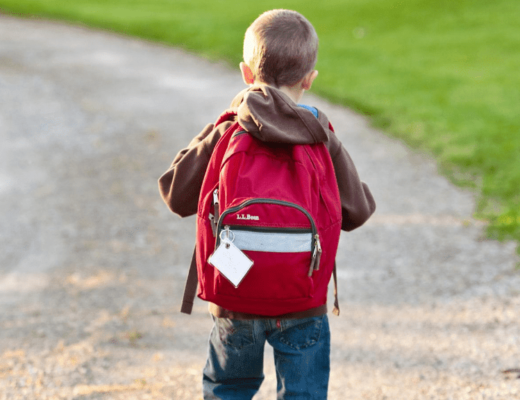
A useful solution for a child who will be walking home from school alone is to attach a small notiOne tracker to their keys or backpack, which lets parents keep an eye on the child’s current location.
Research by the Centre for Pedestrian Transport (2024) shows that the highest number of incidents involving children aged 7–10 occurs between 13:00 and 16:00 – exactly when children are walking home from school on their own. That is why the decision to let your child walk home from school alone should be carefully thought through.
In addition, you need to prepare a written declaration permitting your child to walk home from school on their own and submit it to the school. The declaration should include information such as:
- the date and place,
- the child’s full name and the class they attend,
- permission to walk home unaccompanied,
- a statement that the parent takes responsibility for the child once they leave the school grounds,
- the signature of the guardian or parent.
Children outdoors without supervision – the legal side
A child who has not yet turned 7 should not be outside on their own. If the parents are not with them and they are not being looked after by a person who is at least 10 years old, the parents or legal guardians may be fined or reprimanded.
Under Article 160 of the Penal Code, parents can also be punished for leaving a child unsupervised – even at home – for exposing them to an immediate danger of loss of life or serious harm to health, with a custodial sentence of between 3 months and 5 years.
If the act is unintentional, it is punishable by a fine, restriction of liberty or imprisonment for up to one year.
Where to report unsupervised children?
An adult who notices an unsupervised child should notify the police, the family court or the school.
Why is it worth having a GPS tracker for your child?
More and more parents are choosing GPS trackers for children to make sure their little one is safe – whether they are walking home from school or playing in the yard.
Here are the key benefits:
- Real-time location – you can check on the map where your child is.
- Alerts when they wander off – the app notifies you when your child leaves a designated zone.
- Safe contact – you can react quickly if your child gets lost or does not answer the phone.
- No subscription – devices such as the notiOne GPS Plus work with no monthly fees.
A child tracker like this gives parents peace of mind, and gives the child more freedom and a sense of independence.
According to the notiOne team, in 2024 there were 35% more activations of child trackers in September – the month the school year begins.
“Parents treat a tracker as an extension of their care, especially when the child starts walking home from school alone. It gives them a real sense of security.” – says Piotr Kurowski, CEO of notiOne.
The law does not clearly define the age from which a child may go out alone. However, under the regulations, children under the age of 7 may not be left without adult supervision. From the age of 7 they may use the road on their own, but only if they are mature enough. At that point it is worth equipping them with a GPS tracker for children, which lets parents check where they are at any time.
Yes! Many modern devices, including the notiOne GPS PLUS, are subscription-free child trackers. They work through an app on your phone and the GPS/GSM network, so a parent can see the child’s position in real time with no monthly fees and no contracts to sign.
A GPS tracker for children is a small device that can be clipped to a backpack, jacket or keys. Thanks to the GPS signal and a mobile app, a parent can check the child’s location on the map at any time and receive a notification when the child leaves a designated zone (e.g. school or home). It is a simple and effective solution that improves the safety of the youngest.
Yes, most modern GPS trackers, including the notiOne GPS Plus, also work abroad. The device automatically connects to the GSM network of available operators, so you can track your child’s location during holidays or school trips.
Yes, GPS trackers for children are completely safe. They do not emit harmful radiation and do not record conversations or sounds – they are used solely for locating. These devices comply with European safety standards, so they can be used every day without worry.
The law does not give a specific age limit, but it is clear from the regulations quoted above that a child under the age of 7 should not be left home alone – such a lack of supervision may be treated as exposing the child to danger. After the age of 7, the answer to the question “from what age can a child stay home alone” depends on the child’s maturity: whether they know the safety rules, can call for help and know what they must not do (e.g. use the gas cooker or open the door to strangers). In practice, many parents start with short trials of ten to twenty minutes and gradually extend the time the child spends home alone, while staying in touch by phone or relying on a child tracker.