The international SPECIFIC project has launched in Poznań to explore how the 15-minute city concept can work in practice. The study uses cargo bikes fitted with notiOne GPS Connect trackers, which help analyse the real routes and behaviour of users.
Can you imagine a city where everything you need – work, school, shopping or a bike repair shop – is within a 15-minute bike ride?
This isn’t a futuristic vision but the direction European metropolises are genuinely heading in. And now Poznań too, where the SPECIFIC research project is under way, run in partnership with Adam Mickiewicz University, the City of Poznań and the notiOne brand. The study will show what 15-minute cities in Poland could look like in practice.
We’re proud to say that notiOne is part of this process. Our notiOne GPS Connect devices have been installed on the cargo bikes taking part in the study, helping the researchers and the city better understand what urban mobility looks like in practice. The project is modelled on the well-known and already running “Oxford 15-minute city” initiative.

What are 15-minute cities – life closer to you
The concept of 15-minute cities in Poland assumes that most everyday errands can be taken care of without needing a car. Everything you need is within a short walk or bike ride. The result? Fewer traffic jams, cleaner air and more time for yourself. In a broader sense, it’s a vision of the compact city – where you can sort out everything you need practically on your doorstep.
It’s an idea being implemented by cities such as Paris, Utrecht and Copenhagen. In Poland, the pilot location for this approach is Poznań. Together with researchers from Adam Mickiewicz University and international partners, the city is taking part in the SPECIFIC project (Specifying Practices Enabled by Cycling in Fifteen-Minute Cities).
Oxford 15-minute city – the city where it all began
The SPECIFIC project has its roots in the United Kingdom, where it is led by the Transport Studies Unit at the University of Oxford. It was in Oxford that the first analyses and tests of the 15-minute city concept began, examining how residents move around the city, how they plan their daily routes and how the distance between people and services can be shortened. Oxford became proof that the 15-minute city idea can work not only in metropolises but also in medium-sized cities, where public transport and cycling infrastructure have to work hand in hand with residents’ everyday needs.
The experience gained in Oxford inspired the project’s expansion to other European cities. One of them is Poznań, which is now continuing this research in a local context, with the participation of notiOne GPS Connect and the support of other local businesses.
The SPECIFIC project – science, technology and everyday life
The aim of the SPECIFIC project is to find out how car dependency can be reduced in Polish urban and suburban conditions by replacing cars with cargo bikes and e-bikes.
The researchers are analysing, among other things:
- what short-distance delivery logistics look like,
- which routes cargo bikes cover,
- and which barriers hold back the development of cycle transport in the city.
This is exactly where our notiOne GPS Connect trackers come in. They make it possible to track the routes, distance and working time of the cargo bikes in real time. The data collected will help determine where and how bikes can effectively replace cars in everyday logistics.

Why are we taking part in the 15-minute city project in Poland?
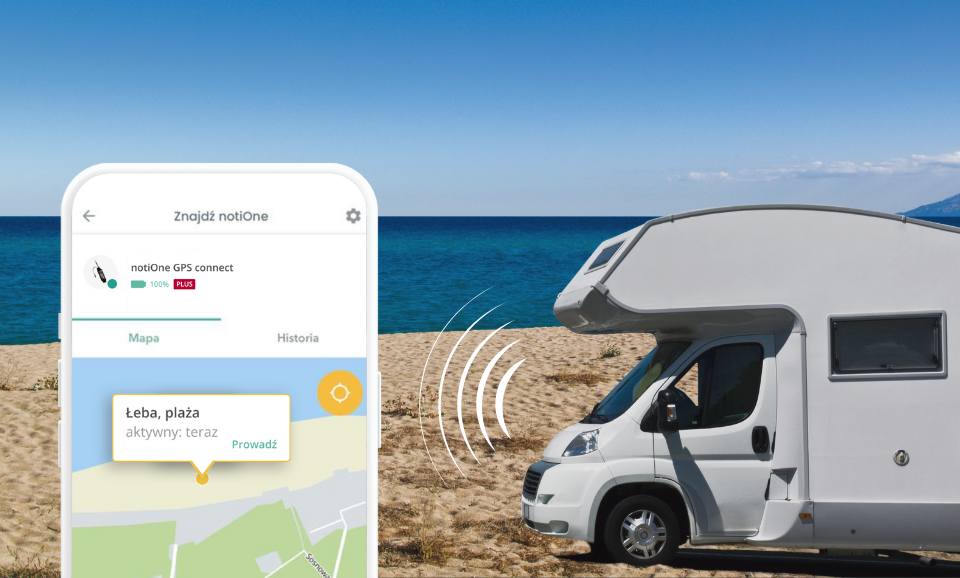
At notiOne, we believe that technology makes sense when it genuinely makes people’s lives easier. For us, taking part in the SPECIFIC project is more than a research partnership – it’s a contribution to the development of modern, green cities. Cities where mobility is resident-friendly and life is simply better. Our notiOne GPS Connect devices are used every day to protect e-bikes, e-scooters and camper vans from theft. In this project, however, they’re helping with something much bigger: understanding how to build cities on a more “human scale”.
“This project isn’t just about technology. It’s about understanding how people really move around the city and what can be done so that everything that matters is closer to them. It’s great to see that our devices can be part of a change like this,” says Bartosz Łączka of notiOne.

Hazay Bikes cargo bikes
The tests in the SPECIFIC project use cargo bikes made by Hazay Bikes, a Polish manufacturer specialising in high-capacity urban vehicles.
It’s on these bikes that our notiOne GPS Connect trackers have been installed to precisely track their routes, how often they’re used and the places where they run into obstacles in city traffic.
Combining GPS technology with the Hazay Bikes cargo bike fleet will make it possible to gather real-world data on how residents move around the city and how to plan infrastructure that’s friendlier to cycle transport.
What’s next for the 15-minute city project in Poland?
Tests and analyses of cargo bike journeys in Poznań are currently under way. Once the field research stage is complete, conclusions and recommendations will be drawn up that could help shape the future of urban mobility in Poland and Europe.
For us, it’s further proof that notiOne can support not only safety but also positive change in the environment we live in.
Find out more about the SPECIFIC project:
🔗 Official SPECIFIC project website
🔗 CityLab Poznań – project overview
🔗 City of Poznań – project announcement
🔗 notiOne GPS Connect – supporting the 15-minute city project
Frequently asked questions about the 15-minute city
It’s the idea of a city of “short distances”: you take care of everyday errands close to home, without long commutes. Less wasted time, more convenience. Everything within 15 minutes.
How cargo bikes and e-bikes can handle deliveries and short trips within neighbourhoods. The focus is on solutions that can actually be implemented in real life.
No, it isn’t a ban on cars. It’s about more choice, so you can decide whether to drive today or whether it’s more convenient to cycle, walk or take public transport. The key is better planning, not bans.
In a 15-minute city, everything is simply closer. You don’t have to plan every day around traffic jams and parking. Residents meet locally more often, use nearby shops and have more time for living rather than commuting. It’s an everyday life built on convenience and calm, not rush.
No, quite the opposite. The 15-minute city concept isn’t about bans or controlling traffic, but about creating choice. The point is that everyone can decide for themselves whether to drive, cycle or walk. It isn’t about taking away freedom, but about reclaiming time and independence.