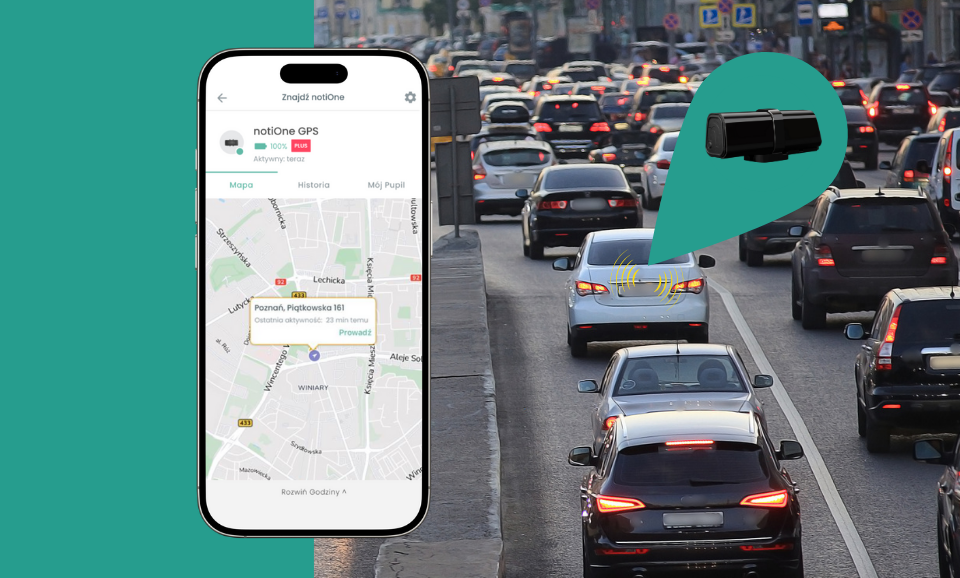
In an age of growing demand for safety and control over our belongings, the GPS tracker is no longer a luxury. It’s becoming an everyday tool. It enables precise tracking of a car, people or valuable items in real time. All you need is an internet connection to keep everything under control wherever you are.
There’s a wide range of solutions on the market, from small key fobs, through devices permanently installed in vehicles, to smartwatches designed with children and seniors in mind. The variety of models means everyone can find something suited to their needs and lifestyle.
Choosing the right tracker depends on a few key factors:
- Purpose – is it meant to be a GPS tracker for a car, a person, an animal or an item?
- Power supply – hard-wired models work well in vehicles, while portable ones need regular charging.
- Battery life – important for mobile devices.
- Ease of installation – particularly important for individual users.
2026 is shaping up to be a breakthrough year for GPS technology. Devices are becoming ever more advanced, cheaper and more widely available. They’re used by private individuals and businesses alike, which confirms their versatility and growing popularity. The rise in interest stems not only from safety concerns but also from the need for efficient management of time, logistics and resources.
Modern trackers offer a range of features that make them even more useful:
- Geofencing – notifications when the object leaves a defined zone.
- Route history – the ability to analyse the route travelled at any time.
- Integration with mobile apps – full control from your smartphone.
And what will the future bring? Will GPS trackers become part of smart homes and IoT systems? Will models with voice recognition or analysis of user habits appear? One thing is certain: GPS technology is only just getting started, and the most exciting developments are still ahead of us.
How a GPS tracker works
GPS locating relies on signals from satellites orbiting the Earth. The device receives this data and calculates its position to within a few metres. The information goes straight to the app, so the user sees the object’s location in real time. Many models, such as notiOne GPS Plus, combine GPS technology with the GSM network. As a result, they work reliably even in tunnels, dense forests or city centres, where the satellite signal can be limited.
How the GPS system works in trackers
The GPS system is the foundation of every tracker. It’s based on a global network of satellites that constantly send signals to devices on Earth. The tracker analyses the time it takes for signals from at least three satellites to arrive and, on that basis, calculates its position in three dimensions: longitude, latitude and altitude above sea level. This process, known as triangulation, makes it possible to determine a location very precisely.
And what if the satellite signal is disrupted? That can happen in tunnels, among tall buildings or in dense forests. In such situations the tracker can use alternative data sources, such as the GSM network or Wi-Fi networks. This means the device can still deliver accurate location information. It’s particularly important in industries where every second counts – e.g. logistics, transport or emergency services.
Location accuracy and the factors that affect precision
Modern GPS trackers offer accuracy of up to 2.5 metres. That’s a huge advantage, especially if precise real-time tracking matters to you. However, this precision can vary depending on a number of factors:
- weather conditions,
- obstacles in the terrain (e.g. buildings, trees),
- the quality of the satellite signal,
- electromagnetic interference.
In places such as tunnels or densely built-up districts, the signal can be disrupted, which affects the accuracy of the reading.

Types of GPS trackers
Choosing the right GPS tracker is crucial both for safety and for effective monitoring. There are many models on the market that can be matched to specific needs and uses. You can choose from devices that are:
- portable – ideal for temporary use,
- permanently installed – providing continuous power and stability,
- ultra-compact – easy to hide and discreet.
Each type has its own unique characteristics, so before buying it’s worth defining exactly what the tracker will be used for. GPS is increasingly becoming an integral part of everyday life – both private and professional.
GPS trackers for cars
GPS trackers for cars offer far more than just convenience – they give you full control over your vehicle. They’re particularly useful for fleet owners and drivers, enabling:
- real-time vehicle tracking,
- geofencing – notifications when the car leaves a designated zone,
- route optimisation and management of drivers’ working hours,
- lower operating costs thanks to better organisation.
You can choose a permanently installed model powered by the vehicle’s electrical system, or a portable one that offers greater flexibility. It’s a tool that makes a real difference to a company’s efficiency and savings. Currently the best GPS tracker for a car is notiOne GPS PLUS. It offers all the features above and, on top of that, it’s a subscription-free GPS tracker.
Mini GPS trackers and key fobs
Mini GPS trackers in the form of key fobs are an excellent solution for people who want to protect small but valuable items – such as keys, a wallet or a child’s backpack. Their main advantages are:
- compact size – easy to hide and carry,
- real-time tracking,
- location notifications via the app,
- intuitive operation – a single tap is all it takes to find a lost item.
It’s the ideal solution for the forgetful and for people who value convenience. Our recommendation for anyone looking for this kind of solution is notiOne go! PLUS.
Battery-powered and hard-wired GPS trackers
The choice between a battery-powered GPS tracker and a permanently installed model depends on how and how often it will be used:
| Power supply | Advantages | Use |
|---|---|---|
| Battery | Mobility, easy to move around | Monitoring shipments, temporary supervision |
| Hard-wired | Constant power, no need for charging | Company fleets, long-term monitoring |
The key is to match the type of power supply to the specific use and the user’s needs.
GPS tracker features
Today’s GPS trackers offer far more than just position tracking. Their extensive features make them extremely useful both in everyday life and in business applications. From real-time monitoring, through geofencing, to advanced options such as remote fuel cut-off or audio monitoring, these small devices provide flexibility and security in many scenarios.
Modern GPS trackers are comprehensive security systems that can be tailored to individual needs. Their growing popularity is down to their ability to integrate with other technologies and their ease of use. Everything suggests that in the future they’ll become even more integrated into our daily lives.
Geofencing and zone-crossing alerts
One of the most practical features of GPS trackers is geofencing – the ability to create virtual safety zones. When the object leaves or enters a designated area, the user receives an immediate notification.
This solution works well in many situations:
- Parents can receive an alert when their child leaves the school grounds.
- Pet owners are informed when their pet wanders off the property.
- Companies can monitor their vehicle fleet and respond to unauthorised movements.
- Private individuals can protect their car against theft.
Geofencing allows a rapid response in emergency situations and will most likely become standard in the majority of GPS trackers.
Location history and internal memory
Location history lets you analyse the routes and places where a given object has been. It’s particularly useful in the event of disappearance or theft, or when you need to analyse a user’s behaviour.
If the tracker has built-in internal memory, it can record data even without network access. That’s a huge advantage in situations where the GPS signal is temporarily unavailable.
Example uses:
- Transport companies can analyse the data and treat vehicle monitoring as a source of savings.
- Parents can check where their child has been during the day.
- Vehicle owners can retrace the route in the event of theft, using the device as a car tracker.
- Individual users can analyse their travel habits.
In the future, integration with analytics systems is possible, which will help to better understand movement patterns and optimise operations.
Power-saving mode and battery life
Many GPS trackers are equipped with a power-saving mode, which reduces the position update frequency and thereby extends battery life.
This solution is particularly useful in situations where:
- The device has to work for a long time without charging.
- The tracker is in a hard-to-reach place (e.g. luggage, a container).
- Regular charging isn’t possible (e.g. while travelling).
- The device needs to operate discreetly.
Longer operating time means greater safety and convenience. The future? Batteries that allow weeks or even months of operation without charging are the direction the industry is heading in.

Uses of GPS trackers
In the digital age, where technology permeates almost every aspect of our lives, GPS trackers are becoming an invaluable tool for protecting and managing property. Their range of uses is extremely broad – from vehicle monitoring, through caring for loved ones, to securing valuable items.
Why use GPS trackers? Because they provide not only peace of mind but also real control over what matters most to us. In logistics they make it possible to track shipments, optimise routes and respond quickly to unforeseen events. In companies they support fleet management, fuel consumption control and analysis of drivers’ work. The result? Savings, order and greater transparency in day-to-day operations.
And that’s just the beginning. Let’s look at exactly how GPS can change our lives – for the better.
Tracking children, seniors and pets
The safety of loved ones is a priority. GPS trackers in the form of watches, key fobs or collars let you check at any moment where your child, an older family member or a pet is. It’s technology that gives peace of mind and a sense of control, even from a distance.
Here are a few situations where a tracker can prove invaluable:
- A child doesn’t come home from school – quick locating lets you react immediately.
- A senior with memory problems – being able to find them quickly can prevent a tragedy.
- A missing dog or cat – GPS in the collar lets you find your pet before it gets far.
- Remote care – even when you’re away from home, you have control over your loved ones’ safety.
In the future, trackers may also monitor users’ health, which will make them even more useful.
Protecting luggage, bikes, vehicles and other items
When travelling, in the city, in everyday life – a GPS tracker can act as a silent guardian of your belongings. Placed in a suitcase, clipped to a backpack or mounted on a bike, it lets you quickly locate a lost or stolen item.
Here’s how a tracker can help in practice:
- Air travel – check whether your luggage has arrived with you.
- A bike left in the city – one tap and you know whether it’s still where you left it.
- A backpack with documents – quick locating if it gets lost.
- Electronic equipment – protection against theft or loss.
Trackers are becoming ever smaller, more discreet and more affordable. It’s quite possible that they’ll soon be standard equipment in every piece of luggage, every bike, and even… every wallet.

GPS trackers with an app and no subscription
For those looking for an economical solution, subscription-free GPS trackers with an app are an attractive alternative. They offer core tracking features without the need to pay monthly subscriptions, making them the ideal choice for private users.
Such devices work brilliantly for precise tracking of:
- cars,
- bikes,
- suitcases and luggage,
- sports or electronic equipment.
Together with the free app, the user gets:
- Real-time location tracking – with no delays and no extra costs.
- Alerts about movement or a change of position – immediate notifications in the event of unauthorised movement.
- The ability to define safety zones – the system informs you when the tracker leaves the designated area.
This solution is simple, effective and free of hidden costs. Will subscription-free trackers become the new standard? Everything points that way – especially if future updates bring even more features at no extra charge.
GPS tracker wiring diagram and how to use a GPS tracker
Proper installation and use of a GPS tracker are the basis of its reliable operation – especially if discretion matters to you. It’s crucial that the device is placed where it can’t be seen by outsiders. That’s not only a matter of security but also of protecting your privacy.
The most commonly chosen places to install a GPS tracker:
- Inside the glovebox – provides good cover and easy access when needed.
- Under a seat – a spot that’s hard to notice, yet doesn’t interfere with the signal.
- In the boot – ideal for larger vehicles, where the tracker can remain completely hidden.
Each of these locations allows the device to be concealed effectively without adversely affecting how it works.
Don’t forget about access to the GPS and GSM signal. The tracker must have a stable connection to the satellites and, if it uses a GSM module, to the mobile network. Without that, it won’t be able to transmit data in real time.
Technology is constantly evolving – perhaps trackers that are completely invisible yet provide uncompromising signal quality will appear before long.

Where to install a car tracker?
Planning to install a GPS tracker in your vehicle? Here’s how to do it step by step:
- Choose the right installation spot – a car GPS tracker should be hidden discreetly, but in a way that allows quick access if servicing or a check is needed.
- Read the manufacturer’s instructions – it’s not just a formality but a way to avoid mistakes and ensure the device works properly.
- Connect the tracker to a power supply – following the manufacturer’s recommendations, to ensure your car GPS tracker keeps working without interruption.
- Set the device up with the app – most modern models offer an intuitive setup process, even for people with no technical experience.
Good news: more and more tracker models offer quick installation – no cables, no tools, no stress.
Wiring diagrams and concealing the device
When installing a GPS tracker, both the wiring diagrams and the way it’s concealed matter. Following the manufacturer’s recommendations guarantees the device will work properly without interference.
Tips for concealing the tracker:
- Avoid placing it close to metal body parts – they can interfere with the GPS signal.
- Choose spots that let the signal through well – e.g. plastic housings or the vehicle’s interior spaces.
- Make sure the tracker isn’t exposed to mechanical damage – e.g. from objects sliding around in the boot.
- Check the signal quality after installation – before you consider the installation complete.
In the future, technology may make it possible to install a tracker anywhere, with no worries about connection quality. A GPS tracker is a simple way to gain peace of mind and control. It helps you find your car, protect your luggage, keep an eye on your child or monitor a vehicle fleet. Modern solutions such as notiOne GPS Plus and notiOne GPS Connect prove that GPS technology can be effective, discreet and free of additional charges.