In 2026, anti-theft protection is no “luxury”, but a sensible response to a real risk. Thefts increasingly look nothing like a film-style forced break-in or simply hot-wiring the vehicle. Today, the popular methods are keyless attacks (the so-called “relay” or “suitcase” attack) and attempts to bypass the car’s electronics (the “Game Boy” attack). That’s why simply locking the doors no longer gives you peace of mind. If you want effective anti-theft protection for your vehicle, you need to think in layers: make it harder to drive off, harder to start, and increase the chance of tracking it down.
The biggest mistake? Looking for a single “miracle” device. In practice, the best protection is a combination of 2–3 solutions. The winning set-up is usually: mechanical locks + electronics + notifications + location tracking. This is an approach that genuinely raises the level of protection and reduces the chances of car theft. Below we present a short set of solutions that will genuinely improve the security of your vehicle.

How to choose car security — without blowing your budget
When choosing car security, take into account things that seem unimportant at first glance but have a huge impact on how attractive your car is as a potential theft target. These include:
- where you park (lighting, street, housing estate, underground car park),
- how often you leave the car “just for a moment” (petrol station, shop, gym),
- whether you have keyless entry,
- the value and “sellability” of the vehicle.
After an honest assessment of the points above, we move on to the next stage: planning what will work in our case, and how many obstacles, and what kind, we want to put in a potential thief’s way. In many cases one solution isn’t enough, and a combination gives the best results. For example: steering wheel lock + alarm + GPS tracker. A set-up like this works on two levels: it deters and obstructs, and if an attempted car theft or an actual theft does happen, it increases the chance of acting quickly.
Mechanical vehicle security: the first barrier that still works
In theory, we all know that “a lock won’t stop a thief forever”. And that’s true. In practice, thefts don’t happen in a vacuum. A thief works fast, under time pressure, often in a place where someone might walk past or look out of a window. That’s why mechanical car security still makes sense: it doesn’t have to be indestructible, it has to be a real nuisance. It has to make the theft stop being an “easy job”.

Mechanical car security has one advantage that no app can imitate: it’s visible and it always works. Regardless of signal range, battery level or whether your phone happens to have internet access. It’s a classic that often works “psychologically”: the thief sees the obstacle and weighs up the risk. And if there’s a car parked next to it with no lock at all… the choice is usually obvious.
The most common types you’ll come across are:
- steering wheel locks (visible, quick to use),
- gear lever locks,
- pedal locks.
Mechanical locks aren’t indestructible, but their strength lies in the fact that they make the theft take longer, generate noise and raise the risk of being “caught in the act”. And that genuinely lowers the chances of a successful getaway. That’s exactly why, as a first layer of protection, they can do more than many a “clever gadget” that only works in ideal conditions.

Electronic protection systems: alarms, immobilisers and sensors
If the main job of mechanical locks is to obstruct and discourage, electronics have a different task: to catch the moment when something suspicious is happening. To give you the chance to react before it’s too late.
In 2026, a siren alone no longer makes the impression it once did. A dozen or so years ago, every one of us would lean out of the window at the sound of an alarm. And today? People in car parks hear alarms every day and often ignore them as “yet another car that set itself off”. That’s why electronics make sense when they do two things at once: make the car harder to start and shorten your reaction time. This is where anti-theft systems, and the broader vehicle protection system, come in.
Alarms and sensors as anti-theft protection
A well-configured alarm is still a valuable siren-based security measure, but the real work is done by sensors and automatic scenarios. The point is for the system not to “wail” for no reason, but to respond to the specific situations that come up most often in thefts:
- shock / tilt (e.g. lifting, a tow truck, an attempt to move the car by force),
- door / bonnet opening,
- movement inside the cabin (depending on the solution).
If you add security with a motion sensor and a quick alert to this, the chance that you’ll manage to react in time increases. And here we get to the heart of the matter: in the modern approach, what matters is not that the alarm “screams”, but that you get a signal that something is wrong.

Trackers: the “recovery” layer after a car theft
Even the best security gives no 100% guarantee. And it’s worth saying that plainly instead of promising a miracle. The difference is whether, in the event of a theft, you have any tools to act, or whether all that’s left is filing a report and waiting. If your goal is not only to deter but also to increase the chances of recovering the car, location tracking becomes crucial.
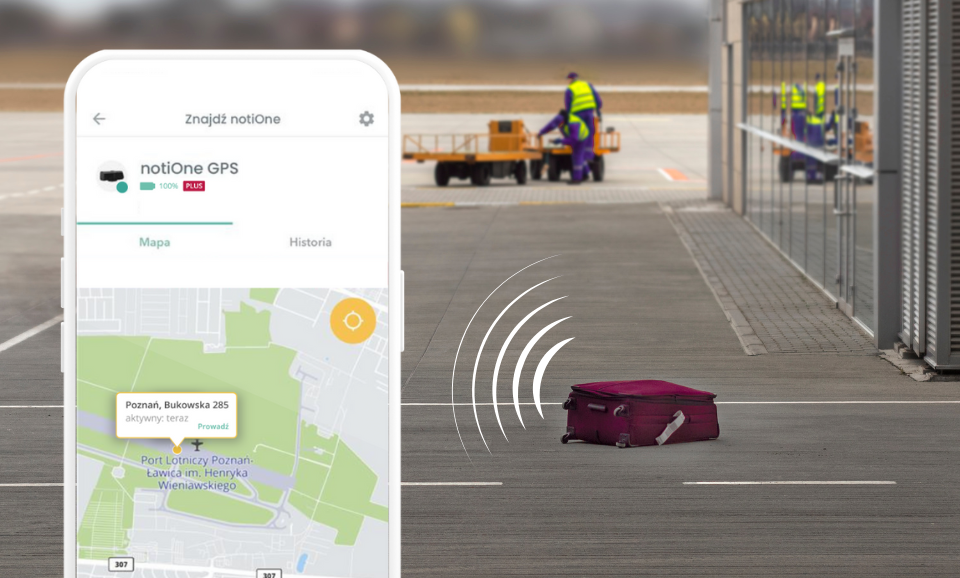
That’s exactly why a GPS tracker is one of the most frequently chosen solutions to complement car security. In 2026, this kind of anti-theft protection is the best solution, as these devices rely only on GPS and GSM systems. They also have shock sensors and will let you know about any unwanted change of location.
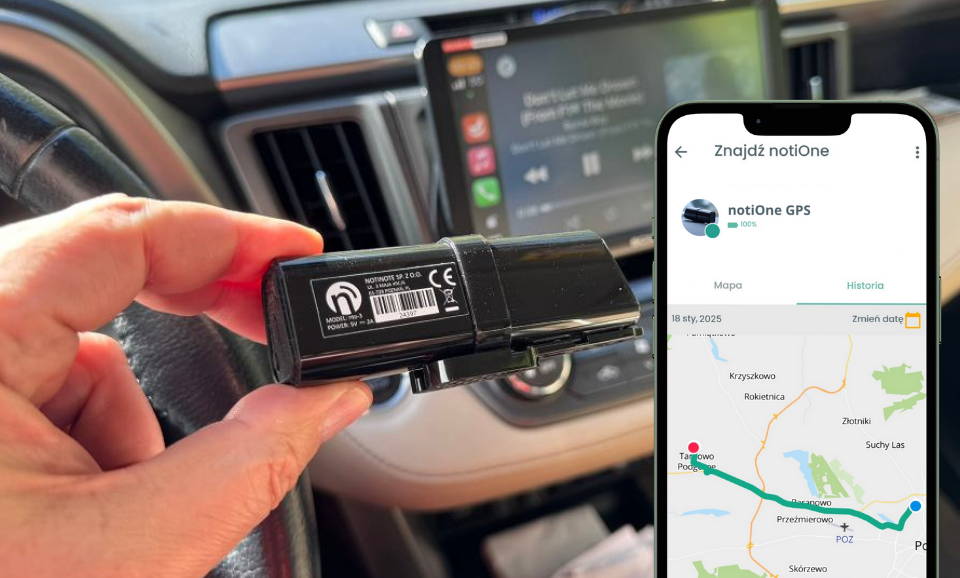
Here, naturally, the best GPS tracker is notiOne GPS PLUS for the car as an additional layer of security:
- it lets you keep track of the vehicle’s position from the app and works with no subscription
- it makes it easier to act quickly when a theft occurs,
- it sensibly complements mechanical locks and an alarm (in other words, it doesn’t replace them, it strengthens the protection).
It’s a good answer to situations where a vehicle’s factory-fitted security proves insufficient or gets bypassed by a thief. The greatest value of location tracking is that it shortens the time spent “looking for a lead”. And as we know, time is merciless in situations like these.

Keyless in 2026: simple steps that genuinely reduce the risk
Keyless entry is convenient, but it’s also an additional risk vector. Many thefts don’t look like a break-in at all. The car simply disappears because someone exploited the signal. So if you have keyless, it’s worth approaching the subject calmly but concretely: don’t panic, just adopt simple habits that genuinely reduce the risk.
The absolute minimum is:
- a signal-blocking pouch/box (especially at night and in public places),
- additional anti-theft protection (mechanical + electronic),
- parking mindfully (lighting, CCTV, close to entrances).
This isn’t “overkill”. It’s good practice, because keyless reduces friction for the owner, but unfortunately it can reduce friction for the thief too.
How to choose the best anti-theft protection in practice
There’s no single solution that suits everyone. The best protection is one that matches your actual conditions and the way you use your car. Below are three simple scenarios to help you work it out.
1) The car is mostly parked on the street / housing estate
Deterrence and quick information matter most. So a sensible set-up is:
steering wheel lock + alarm + security with phone notifications + a tracker (e.g. notiOne GPS PLUS).
2) Underground car park / difficult conditions for GPS
Here it’s layering and resilience to a “difficult location” that count. In practice:
mechanical + electronic, and if it makes sense in your case, consider an additional radio-based layer.
3) The car is on the road, with lots of “just a moment” stops
The biggest enemy is routine. You leave the car for 5 minutes, and it’s precisely those “5 minutes” that can be crucial. What works here is:
an emphasis on alerts + location tracking + a quick, visible mechanical lock.
Summary
In 2026, a layered approach works best. Mechanical car security makes it harder to drive off and deters, electronics and sensors increase control, and security with phone notifications shortens your reaction time. If you add location tracking to that (e.g. the notiOne GPS PLUS tracker for the car), the chances increase that even if a theft does happen, recovering the vehicle will be a realistic prospect.